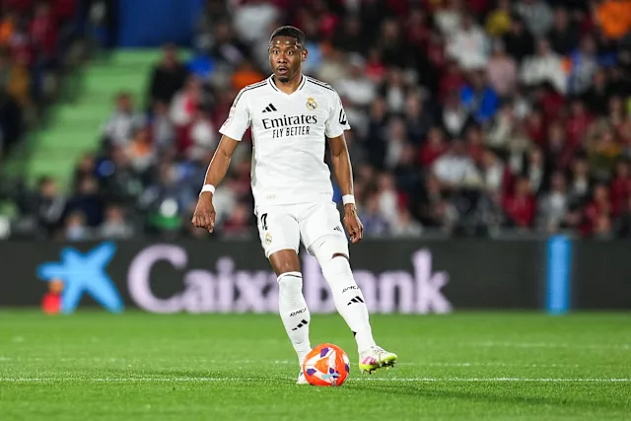
Not every influential figure in a football team appears in the starting lineup. Senior players who rarely or never step onto the pitch can still shape how a team performs, especially in high-pressure matches. For viewers, their presence becomes visible through structure, discipline, and decision-making patterns that hold the team together during key moments.
How off-pitch leaders influence tactical discipline
Veteran players often act as extensions of the coaching staff, reinforcing tactical instructions during training and pre-match preparation. Their influence ensures that positional structures remain consistent even under pressure.
This shows up during matches when teams maintain compact spacing and resist chaotic transitions. Watch how defensive lines move in unison or how midfielders hold shape instead of chasing the ball—these are often signs of strong internal leadership rather than just coaching design.
Why communication patterns improve on-field decisions
Even from the sidelines, experienced players guide teammates through constant feedback before and during matches. This creates a shared understanding of when to press, when to slow the tempo, and how to manage difficult phases.
During live games, this translates into fewer rushed decisions. Players appear more composed in possession and more coordinated in defensive actions, particularly in moments where less experienced teams might lose structure.
The impact on younger players’ positioning
Young players benefit directly from having senior figures who help them interpret tactical roles. Instead of reacting instinctively, they learn to position themselves based on game context.
Before and after mentorship influence
| Aspect | Without veteran guidance | With veteran guidance |
| Positioning | Reactive and inconsistent | Structured and anticipatory |
| Decision-making | Hesitant under pressure | More confident and quicker |
| Defensive awareness | Ball-focused | Space-oriented |
Before analyzing this table, it is important to recognize that positioning is not purely instinctive at the professional level. It is learned through repetition, communication, and correction. Veteran players accelerate this learning process by providing immediate feedback and reinforcing tactical awareness in training environments.
From a viewing perspective, these differences become clear when watching how young players move off the เว็บดูบอลสด goaldaddy. Instead of drifting out of position, they begin to anticipate passing lanes and defensive responsibilities. This leads to smoother team play and fewer structural breakdowns during matches.
What live viewing reveals about invisible influence
The effect of non-playing veterans becomes clearer when watching full matches rather than isolated highlights. Their influence is embedded in collective behavior rather than individual actions.
When following games through ดูบอลสด, you can observe how teams maintain shape during long defensive phases or reorganize quickly after losing possession. These patterns often reflect preparation and leadership rather than spontaneous decision-making. The absence of visible errors in key moments is frequently the result of off-pitch guidance rather than individual brilliance.
Key match patterns linked to dressing room leadership
To understand the impact of these players, viewers need to track recurring structural behaviors instead of focusing on standout moments. Leadership influence is subtle but consistent across different phases of play.
Start by observing how quickly the team resets its shape after transitions. Then, track communication between players—gestures, pointing, and constant adjustment. Notice whether pressing actions occur collectively or in isolation. Also, evaluate how the team responds after conceding a chance or goal.
- Speed of defensive reorganization after losing possession.
- Frequency of visible communication between players.
- Coordination of pressing across the front line.
- Emotional control after conceding chances.
- Consistency of midfield spacing.
These indicators help reveal the hidden structure behind a team’s performance. Instead of attributing organization solely to the coach, viewers can recognize the role of internal leadership in maintaining stability throughout the match.
When leadership cannot compensate for tactical flaws
While off-pitch veterans add stability, they cannot fully correct structural weaknesses in the system. If a formation exposes space or lacks balance, leadership alone will not prevent recurring issues.
This becomes evident when teams repeatedly concede similar types of chances. Viewers should distinguish between isolated errors and systemic problems that persist despite visible discipline and effort.
The balance between experience and physical contribution
There is a trade-off between keeping experienced players for leadership and selecting physically optimal players for match performance. Teams must balance these factors carefully.
During matches, this balance is reflected in substitution patterns and squad rotation. A team with strong off-pitch leadership may appear more stable even when introducing less experienced players into high-pressure situations.
How leadership influence evolves across a tournament
As a tournament progresses, the importance of non-playing veterans often increases. Fatigue, pressure, and tactical adjustments test a team’s mental resilience, making internal guidance more valuable.
Viewers can track this by observing whether the team becomes more organized over time rather than less. Improvement in structure and decision-making suggests effective leadership behind the scenes.
Summary
Non-playing veterans shape team performance through discipline, communication, and tactical understanding that becomes visible during matches. By focusing on structure, coordination, and decision-making patterns, viewers can recognize their influence even without seeing them on the pitch. This perspective adds depth to how matches are interpreted beyond individual performances.