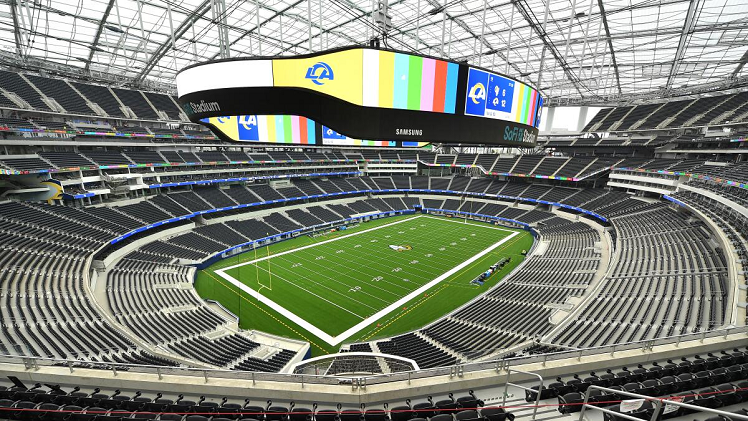
World Cup 2026 will be played largely in arenas built for another sport, with enormous NFL-style bowls now hosting the most tactical game on earth. For fans following full matches or ดูบอลสด, that shift matters: stadium design, surface choices, and geometry all influence how clearly you can read pressing, spacing, and chance creation over ninety minutes.
Why Stadium Architecture Matters for Tactical Understanding
American football venues are built around stoppages, substitution waves, and set-piece collisions, which produces a very different spatial and acoustic design compared to traditional football grounds. Steep tiers, giant lower bowls, and huge touchline run‑offs can subtly change how players feel pressure and how compact a block appears from the stands.
For an analytical viewer, this means you are not only watching twenty‑two players and one ball; you are also reading how stadium scale affects line height, the aggressiveness of pressing, and the speed with which teams reset shape after transitions. A venue that makes communication harder or distances the crowd from the pitch can change how brave a team is in its off‑ball behavior.
How Pitch Dimensions and Run-Off Areas Shape Pressing
Even when the playing rectangle is brought to standard international dimensions, the amount of “dead space” around it in a converted NFL venue can alter the visual cues players rely on. Wider run‑offs and more open corners reduce the sense of being hemmed in, which can encourage defenders to shepherd opponents toward touchlines rather than dive into tackles.
From the stands, you may notice that pressing traps near the sideline rely more on body orientation and covering angles than on using the crowd as a physical barrier. This makes it easier to distinguish between coordinated pressing (with clear cover and support) and desperate lunges, because spacing is more obvious against the larger backdrop.
What Live Viewing in a Giant Bowl Changes for Fans
In a huge multipurpose stadium, your live experience depends heavily on vertical distance from the pitch and the steepness of the stands. High upper tiers give you an almost tactical-camera view of block compactness, rest defence, and passing lanes, but at the cost of fine details like first touch and individual duels.
That trade‑off can actually help serious viewers: sitting higher lets you see the whole 4‑3‑3 shift as the ball moves, the way a back three fans out in build‑up, or how a double pivot adjusts when full-backs invert. You effectively watch the match like a coach, tracking patterns instead of chasing the ball, which is harder to do from flatter, low‑rise stands.
Why Surface Type and Preparation Matter in Converted Venues
Many NFL venues are accustomed to artificial or hybrid surfaces designed for sharp cuts and heavy collisions rather than constant ninety‑minute circulation. When a World Cup pitch is laid over or adapted, subtle differences in grass quality, hardness, and ball roll can affect passing tempo, first‑touch security, and the viability of quick combinational play.
For viewers, that means the same team may look more fluid in one city than another, even with identical tactics. When the ball skids quickly, pressing traps have to be timed perfectly; when it holds up slightly, slower teams can survive longer in a mid‑block. Reading the surface’s behavior early—how firmly passes travel, how often players slip—helps you interpret whether technical errors are tactical, mental, or environmental.
How to Read a World Cup Match Inside an NFL-Style Stadium
To get the most from a converted stadium, it helps to approach the match with a structured viewing plan rather than reacting to noise and big screens. Start by using the pre‑kick‑off warm‑ups to gauge passing velocity, ball bounce, and player movement comfort on the surface. Then, in the first fifteen minutes, focus almost exclusively on team shapes without worrying about who is on the ball.
As the game settles, you can add layers: track where pressing starts (top of the box, halfway line, or deeper), how far full‑backs are willing to advance given the sheer open space behind them, and how often the ball is recycled through centre-backs to reset structure. If you maintain that discipline, the size and design of the venue become tools that enhance your understanding rather than distractions.
Comparing Traditional Football Grounds and 2026 NFL Venues
A useful way to sharpen your eye is to think in comparisons between what you know from classic ลิงค์ดูบอล changy stadiums and what 2026 will offer.
| Stadium Type | Typical Stand Profile | Impact on Viewing | Tactical Details Easiest to See |
| Traditional football bowl | Close, steep, compact | Intense, close‑up feel | Duels, first touch, pressing triggers near touchline |
| Modern football arena | Steep tiers, tight run‑offs | Balanced tactical & emotional | Line height, rest defence, third‑man runs |
| NFL-style mega stadium | Huge bowl, big vertical range | Wide tactical overview | Block compactness, spacing across whole pitch |
Thinking this way during a match helps you consciously choose what to focus on from your particular seat. In an NFL‑style venue, you lean into whole‑pitch patterns; in a compact football ground, you lean into technical execution and micro‑pressure moments.
Where Stadium Scale Can Distort Your Perception
The sheer size of some 2026 venues can make distances look smaller on the pitch than they actually are, which can trick you into misjudging compactness. A back four that appears tight from the top tier may in fact be leaving big vertical gaps for interior runners, while a midfield that looks stretched might still be within coaching tolerances.
To correct for this, pay attention to reference points like the centre circle, penalty area edges, and the width of the six‑yard box. Use them to estimate how many metres separate lines and whether those gaps are growing as fatigue sets in. This habit allows you to spot the moment when a press “breaks” long before it produces a clear chance.
How Big Screens and In-Stadium Replays Affect Live Reading
NFL venues are built around enormous video boards and frequent replay use, which can subtly push fans into highlight‑thinking even when watching live football. If you let your attention follow replays after every foul, you lose the crucial seconds where teams reset shape, adjust pressing height, or reorganize their rest defence.
From a tactical perspective, it is often better to glance at the replay only after you have checked where the defensive line has moved, how the goalkeeper is organizing, and whether the team out of possession is changing its pressing trigger. Treat replays as supplementary, not primary, information if your goal is to understand the flow rather than re‑experience single incidents.
Why These Venues Reward Structured, Patient Watching
Ultimately, the move from pure football grounds to NFL‑style stadiums makes the 2026 World Cup an experiment in how environment and architecture shape the match as a teachable object. The more you watch with a coach’s eye—tracking lines, distances, and repeated mechanisms—the more these giant arenas become vantage points rather than obstacles.
By consciously adapting your viewing habits to the scale, sightlines, and surface of each venue, you can turn a converted stadium into an advantage: a place where the patterns of pressing, spacing, and chance creation are visible in a way television rarely matches.